
Dresden Green Diamond Replica: Everything You Need to Know About This Rare Gem Reproduction
Introduction
Diamonds have fascinated people for centuries, but few gemstones have captured the imagination of collectors, historians, and jewelry enthusiasts quite like the famous Dresden Green Diamond. Known for its extraordinary natural green color and remarkable history, this rare gem is considered one of the world's most valuable and unique diamonds. Because the original diamond is priceless and inaccessible to most people, the Dresden Green Diamond Replica has become a popular way for museums, jewelers, and gem enthusiasts to experience the beauty of this legendary stone. In this article, we explore the history of the Dresden Green Diamond, the purpose of its replica, how reproductions are made, and why they continue to attract attention around the world.
The Story Behind the Dresden Green Diamond
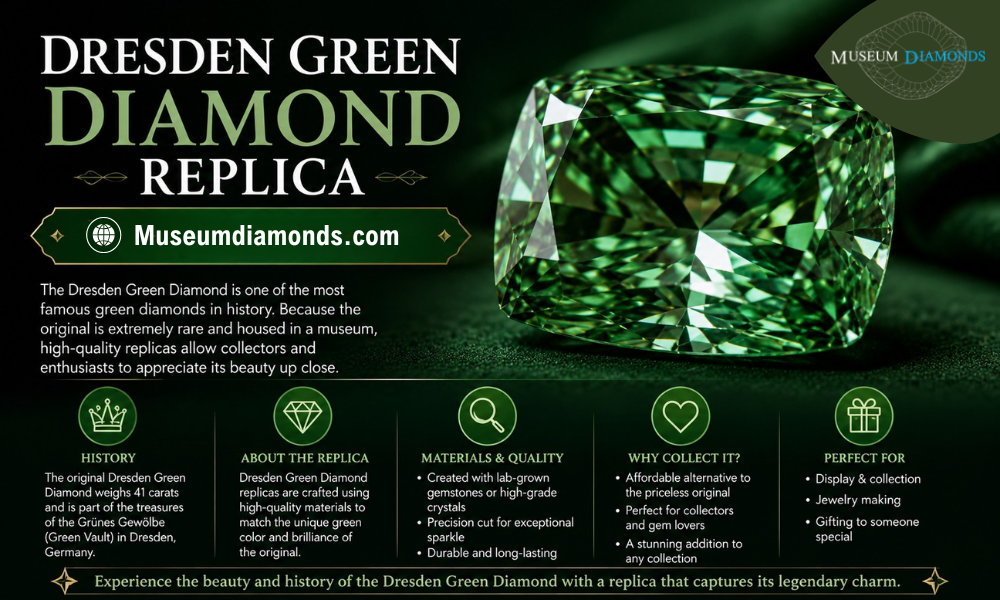
The Dresden Green Diamond is one of the rarest natural green diamonds ever discovered. Weighing approximately 41 carats, the diamond is famous for its vivid apple-green color, which was formed naturally over millions of years through exposure to radioactive minerals deep within the Earth.
Historians believe the diamond originated in India, a region that produced many of the world’s most famous gemstones. During the 18th century, the stone made its way to Europe and eventually became part of the royal collection in Dresden, Germany. Its remarkable color and historical significance quickly earned it worldwide recognition.
Unlike many colored diamonds that receive treatments to enhance their appearance, the Dresden Green Diamond’s color is completely natural, making it exceptionally rare and valuable.
What Is a Dresden Green Diamond Replica?
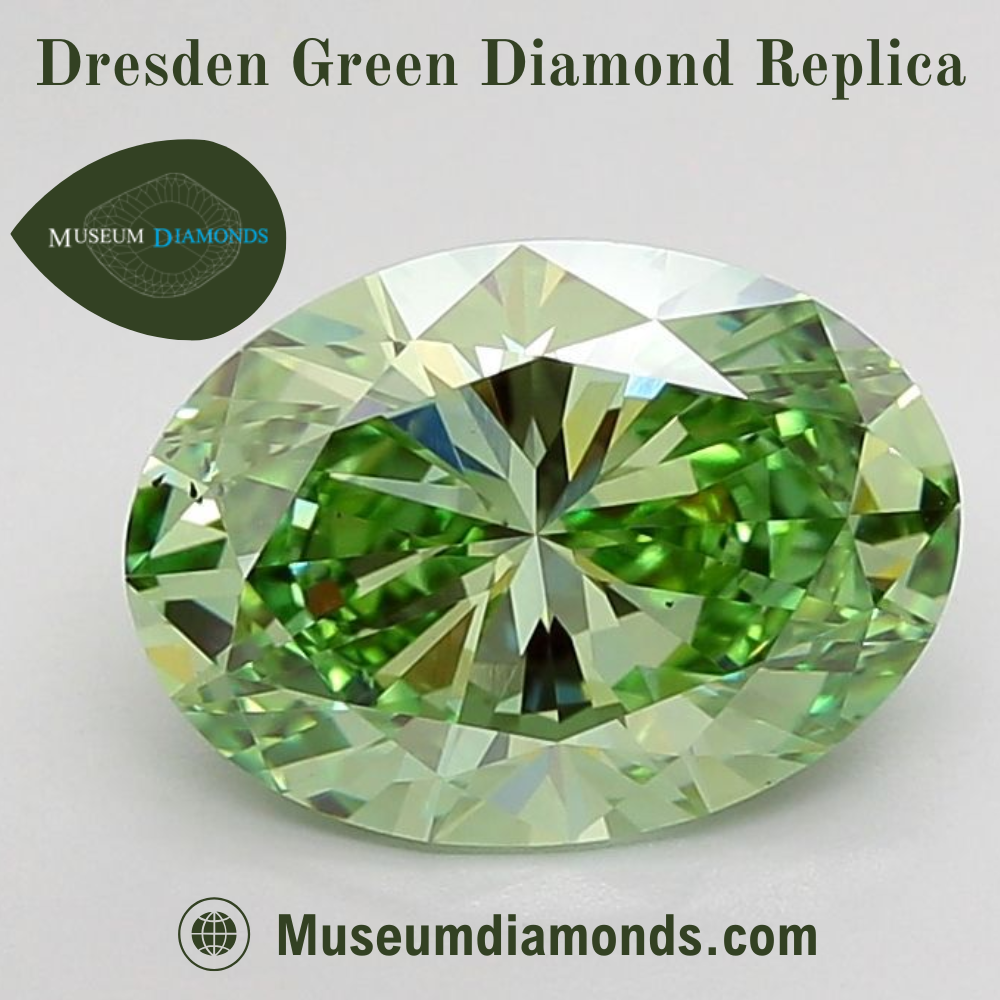
A Dresden Green Diamond Replicas is a carefully crafted reproduction of the original gemstone. It is designed to replicate the appearance, shape, size, and color of the famous diamond as accurately as possible.
Replicas are not intended to deceive buyers or collectors. Instead, they serve educational, artistic, and display purposes. Museums often use replicas when transporting or displaying valuable gems would be risky. Jewellery enthusiasts also appreciate replicas because they allow people to admire the beauty of iconic gemstones without the enormous cost associated with the original.
Modern replicas can be made from various materials, including crystal, cubic zirconia, laboratory-created gemstones, or specially cut glass that closely resembles the original diamond.
Why Are Replicas Created?
There are several reasons why replicas of famous diamonds are produced.
Educational Purposes
Museums and educational institutions frequently use gemstone replicas to teach visitors about gemology, history, and jewelry craftsmanship. A replica allows people to study the stone’s appearance up close without exposing the original to damage or theft.
Security and Preservation
The original Dresden Green Diamond is considered priceless. Transporting or exhibiting such a valuable gem presents significant security risks. High-quality replicas provide a safe alternative while preserving public access to its beauty.
Accessibility
Most people will never have the opportunity to see the original diamond in person. Replicas make it possible for a wider audience to appreciate one of history’s most celebrated gemstones.
Jewelry Inspiration
Many jewelry designers create pieces inspired by famous diamonds. Replicas allow designers and collectors to enjoy the visual appeal of the stone without spending millions of dollars.
How Are Dresden Green Diamond Replicas Made?
Creating a realistic gemstone reproduction requires a combination of artistry and advanced technology.
The process typically begins with detailed measurements and photographs of the original diamond. Experts study the gemstone’s cut, dimensions, color, and brilliance to ensure accuracy.
Modern techniques such as computer-aided design (CAD), laser scanning, and precision cutting are often used during production. Depending on the intended purpose, the replica may be crafted from crystal, synthetic gemstones, or specially colored materials that mimic the natural green hue.
Skilled gem cutters carefully shape the stone to reproduce the unique proportions of the original diamond. The final result is often so convincing that casual observers may find it difficult to distinguish from the genuine gem.
What Makes the Original Diamond So Unique?
Several characteristics contribute to the legendary status of the Dresden Green Diamond.
Natural Green Color
Natural green diamonds are among the rarest colored diamonds in the world. The vivid green coloration of the Dresden Green Diamond is exceptionally uncommon and highly prized by gem experts.
Historic Significance
The diamond has been associated with European royalty and has survived centuries of political change, wars, and cultural transformations. Its history adds tremendous value beyond its physical beauty.
Exceptional Preservation
Unlike many historic gemstones that have been recut over time, the Dresden Green Diamond remains remarkably well-preserved. This allows modern audiences to admire a gemstone that appears much as it did centuries ago.
Global Recognition
The diamond is recognized internationally as one of the most important colored diamonds ever discovered, making it a symbol of rarity and elegance.
Can a Replica Match the Original?
While even the finest replica cannot match the historical significance or intrinsic value of the original diamond, modern reproductions can achieve remarkable visual accuracy.
High-quality replicas successfully capture many of the characteristics that make the Dresden Green Diamond famous, including its color, shape, and overall appearance. For educational displays and decorative purposes, a replica often provides an excellent representation of the original gemstone.
However, collectors and gemologists understand that the true value of the original lies not only in its appearance but also in its rarity, natural formation, and historical journey.
Growing Interest Among Gem Enthusiasts
Interest in famous gemstone replicas has increased significantly in recent years. Social media, museum exhibitions, and online educational resources have introduced more people to legendary gems such as the Dresden Green Diamond.
As awareness grows, so does appreciation for accurate reproductions. Many collectors enjoy learning about gemstone history through replicas, while museums use them to create engaging exhibits that inspire curiosity and learning.
The Dresden Green Diamond Replica serves as a bridge between the public and a gemstone that would otherwise remain inaccessible to most people.
Conclusion
The Dresden Green Diamond remains one of the most extraordinary gemstones in history, admired for its natural green color, fascinating origins, and royal heritage. While the original diamond is a priceless treasure, high-quality replicas allow people around the world to experience its beauty and significance.
Whether used in museums, educational displays, or private collections, the Dresden Green Diamond Replica plays an important role in preserving and sharing the story of this legendary gem. It offers a unique opportunity to appreciate one of nature’s rarest creations while celebrating the craftsmanship and artistry involved in gemstone reproduction.
For anyone interested in diamonds, history, or jewelry design, the Dresden Green Diamond Replica provides a fascinating glimpse into the world of one of the most famous gemstones ever discovered.