
Goodbye, He- Man Dharmendra’s Passing Marks the End of a Cinematic Generation
Introduction
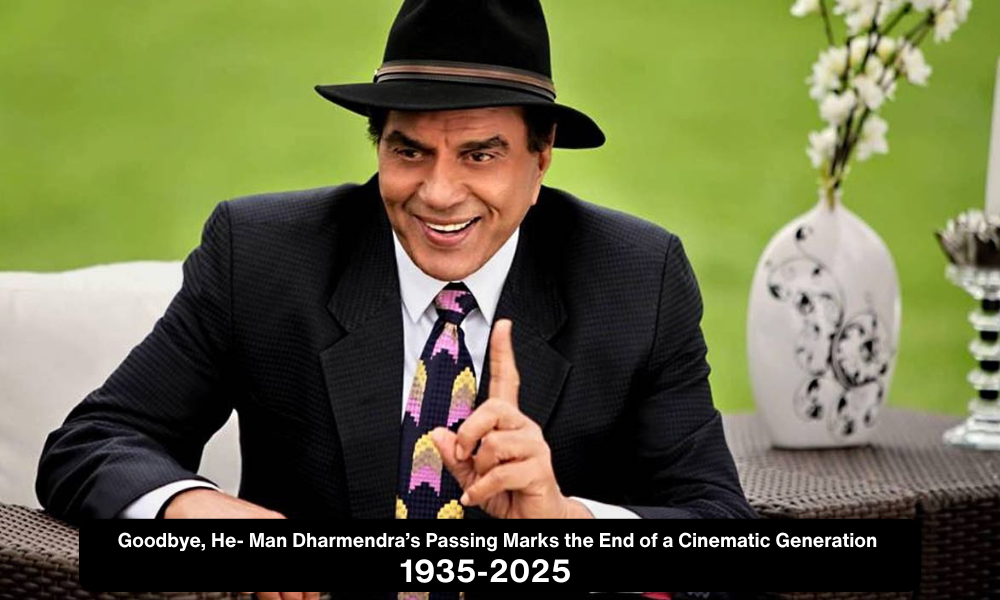
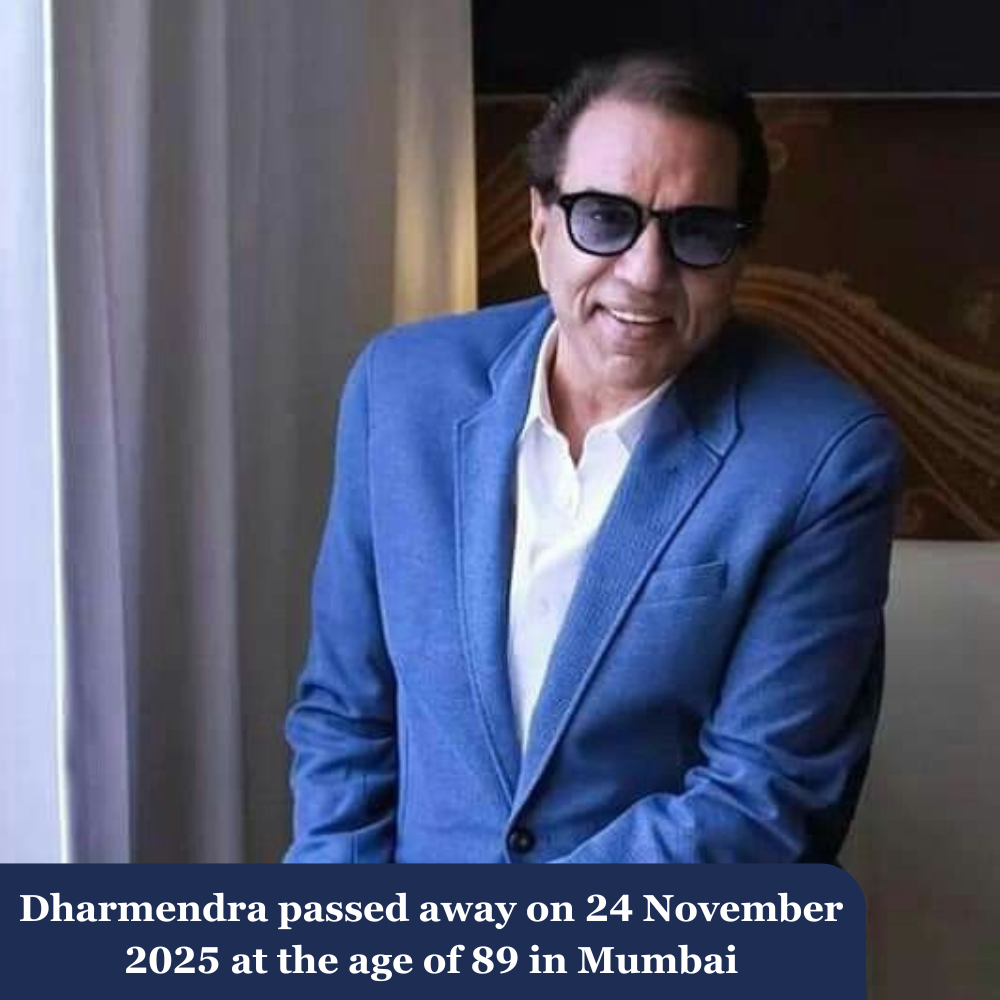
In a dimmed moment for Indian cinema, the fabulous actor Dharmendra passed away on 24 November 2025 at the age of 89 in Mumbai. His death marks not just the end of a life, but the ending of a chapter in Bollywood — a generation of actors whose seductiveness, screen presence, and sheer volume of work defined decades.
The Final Farewell
Dharmendra spent his last days under medical supervision after passing breathing issues and other age- related affections. His family and close musketeers girdled him at home in Mumbai, where he peacefully breathed his last. His body was taken for the last solemnities at the Pawan Hans crematorium in Vile Parle, where the film fraternity and suckers gathered in large figures to pay their felicitations. The gathering of stars, associates, and sweeties stressed not only his elevation as a film star but the depth of affection the public held for him.
A heritage erected Over Six Decades
With a career gauging further than 300 flicks over 60 times, Dharmendra was a miracle in Hindi cinema. Born on 8 December 1935 in Punjab, he entered the film assiduity in 1960 and snappily came a ménage name. From violent action places to romantic leads, comedy to drama, he was one of the most protean actors of his time. His iconic performance as Veeru in Sholay remains indelible.
Why His Departure Feels Like the End of an period
Dharmendra was not simply an actor for one generation; he stretched across numerous. He represented the 1960s and 70s the age of ramping up Bollywood, of evolving icons and shifting followership tastes. He bridged the gap between the macho action idol of aged flicks and the more sensitive, layered protagonists of after times.
When he passed, numerous felt they were losing not just a person but a symbol of a certain kind of cinema — one where the idol had both durability and vulnerability, charm and substance. His death truly marks the end of a period.
Highlights of His Cinematic trip
Muscular idol Image Dharmendra earned fame with his strong screen persona and confident style.
Versatility flicks like Anupama, Phool Aur Patthar, Seeta Aur Geeta, and numerous further showcased his range.
Life He successfully evolved from leading man places to character places, staying applicable across decades.
Honors He entered India’s Padma Bhushan for his donation to cinema.
The outpour of Respect and Grief
The response to his death was immediate and sincere. From actors and filmmakers to suckers across India and abroad, paeans poured in. numerous noted his modesty, warmth, and the way he treated his craft and co-stars with respect. His burial saw the presence of old musketeers, fellow actors, filmmakers, and technicians — people who grew up watching him and those who worked alongside him. It was further than a farewell; it was an homage to a period.
Beyond the Screen the Man Behind the Star
While Dharmendra’s screen image was strong and glamorous, the man behind it was known to be gracious, predicated, and approachable. numerous stories reflect how he treated crew members with kindness, ate beginners, and carried himself with quality.
In a world of gaudiness and fame, he managed to retain authenticity — a particularity both rare and cherished. His particular life, his simplicity, and his deep sense of family made him a figure further than just on- screen; he came an alleviation for numerous.A Family embedded in Cinema
Dharmendra’s family continues to remain a significant part of Indian entertainment. His heritage continues through his children
Sunny Deol
Bobby Deol
Esha Deol
Ahana Deol
His bond with his woman, Hema Malini, was a famed chapter of Indian cinema and popular culture. At the burial, his children, grandchildren, and loved bones
stood together — emblematizing confinity, love, and the strong emotional foundation Dharmendra erected during his continuance.
His Place in Bollywood History
Dharmendra was far further than an actor he was a symbol of old- academy charm, emotional liar, and cinematic grace. His flicks reflected a changing India — from black- and-white liar to the Technicolor period of love, action, comedy, and ultramodern film structure.
He earned the title “ He- Man of Bollywood ” not only because of his action places but due to the strength of his presence, persona, and harmonious impact. His career represented
Professional fidelity
Cultural honesty
Emotional connection with cult
dateless applicability
heritage That Lives On
Dharmendra’s end leaves a void, yet his heritage remains eternal. His flicks will continue to be celebrated, studied, quoted, and participated. youngish actors will continue to cite him as an influence. The style of moviemaking he belonged to where stardom was not just superficial, but backed by seductiveness and craft — will remain a standard.
Indeed, as cinema evolves, his period stands as a memorial of authenticity, charm, and enduring gift.
Conclusion
In cinematic memory, Dharmendra will live on in every laugh, gash, fight sequence, and tender moment he portrayed. He may have left us physically, but his presence will loiter in the frames of his pictures, in the voices of his suckers, and in the heritage of a idol who had heart and strength in equal measure.
For numerous, bidding farewell to Dharmendra is also bidding farewell to the “ Golden Age ” of Hindi cinema. That period may have passed, but the story of the He- Man will continue to inspire, entertain, and reverberate across generations.
Thank you, Dharmendra. Your trip has ended but your legend will walk on ever.