
Fire Pump Manufacturers in India: Reliable Fire Pump Suppliers for Fire Safety
Introduction
Fire protection systems are an essential part of modern buildings, factories, warehouses, commercial complexes, hospitals, hotels, and industrial facilities. A dependable water-based fire protection system needs the right pumping equipment to deliver sufficient water at the required pressure when an emergency occurs. The performance of this equipment can directly influence the effectiveness of sprinklers, hydrants, hose reels, and other firefighting arrangements. Selecting suitable equipment is therefore not simply about comparing pump capacity or purchase prices. Factors such as application requirements, flow rate, pressure, installation conditions, power availability, maintenance requirements, construction quality, and after-sales support all need to be considered. A properly selected pumping system can provide dependable performance while also helping businesses maintain their overall fire safety infrastructure.
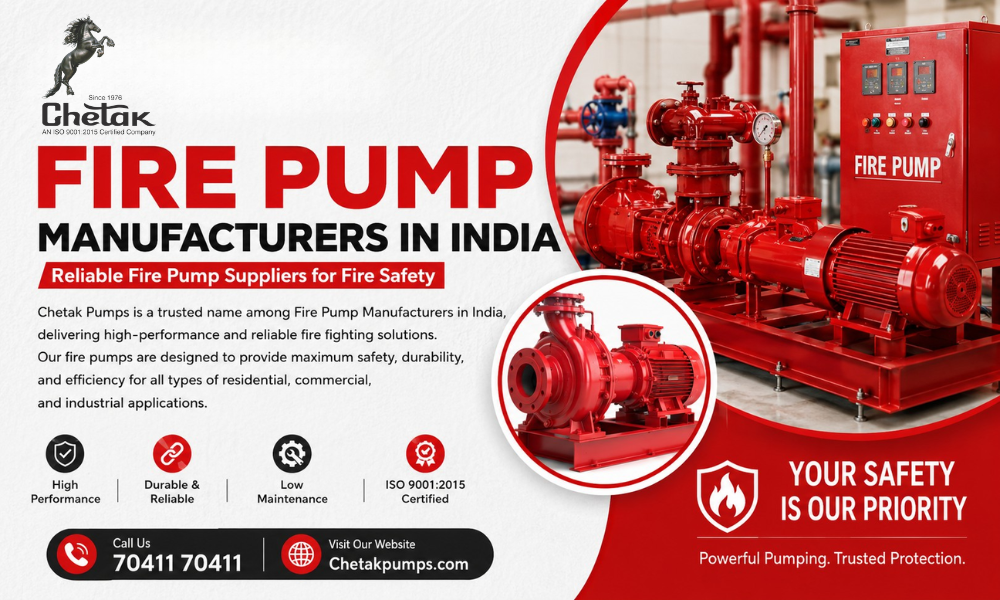
Understanding Fire Pump Systems
A fire pump is designed to supply water at the pressure and flow required by a fire protection network. In many buildings, the available water supply may not provide enough pressure to operate sprinklers or hydrant systems effectively. The pumping arrangement helps overcome this limitation.
A typical system can include several important components, such as:
- Main fire pump
- Standby or backup pump
- Jockey pump
- Electric motor or diesel engine
- Control panel
- Pressure gauges
- Valves and piping
- Couplings and base frames
- Suction and delivery connections
Each component has a specific role. The main pump supplies the required firefighting water, while a standby arrangement can provide additional reliability. The jockey pump generally maintains system pressure and helps prevent unnecessary starting of the main pump because of small pressure fluctuations.
Choosing Reliable Fire Pump Suppliers
A dependable supplier can make the procurement and installation process much easier. Fire Pump Suppliers should be able to provide accurate technical information, suitable configurations, documentation, and support throughout the project.
When evaluating a supplier, buyers should consider:
- Product quality
- Technical expertise
- Range of available models
- Delivery capability
- Installation support
- Spare parts availability
- Maintenance services
- Warranty terms
- Testing and inspection facilities
- After-sales assistance
It is also useful to work with suppliers who understand the requirements of contractors, consultants, facility managers, and industrial customers. Good technical support can help avoid incorrect selection and installation problems.
Types of Fire Pumps
Different buildings and applications require different pump configurations. Manufacturers generally offer various designs according to required flow, pressure, installation conditions, and fire protection system specifications.
Centrifugal Fire Pumps
Centrifugal pumps are widely used in fire protection applications. They are suitable for supplying water to hydrant, sprinkler, and other firefighting networks. Their construction and capacity can be selected according to the requirements of a particular installation.
Horizontal Split Case Pumps
Horizontal split case pumps are commonly selected for larger fire protection installations where high flow rates and continuous dependable operation are important. Their design can also make inspection and maintenance of internal components more convenient.
Vertical Turbine Pumps
Vertical turbine pumps are useful when the water source is located below the pump installation level. They can be used for applications involving underground tanks, reservoirs, and other water sources where conventional suction arrangements may not be suitable.
End Suction Pumps
End suction pumps are compact and can be suitable for smaller or medium-sized fire protection installations. Their relatively simple configuration can make them convenient where space is limited.
Diesel Engine Driven Pumps
A diesel-driven unit can serve as a backup when electrical power is unavailable or unreliable. This makes diesel fire pump arrangements particularly useful for facilities where uninterrupted firefighting capability is essential.
Why Proper Pump Selection Matters
The right pumping equipment must be selected according to the actual hydraulic requirements of the fire protection system. Choosing an undersized unit can result in inadequate pressure or water flow, while an unnecessarily oversized system may increase installation and operating costs.
Before selecting equipment, project teams generally consider:
- Required flow rate
- Required discharge pressure
- Building height
- Number of hydrants or sprinklers
- Water storage capacity
- Pipe network design
- Available electrical supply
- Backup power requirements
- Installation location
- Operating environment
- Maintenance accessibility
A professional assessment helps ensure that the selected equipment matches the overall system instead of being chosen only on the basis of price or motor capacity.
Role of Fire Pump Manufacturers
The role of a manufacturer goes beyond producing a pump. A reliable manufacturer should understand different fire protection applications and provide equipment that matches the required operating conditions.
Experienced Fire Pump Manufacturers generally focus on areas such as hydraulic performance, material selection, motor or engine compatibility, manufacturing quality, testing, and system reliability. They may also offer customized configurations depending on the project requirements.
Quality manufacturing is particularly important because fire pumps are emergency equipment. Unlike many machines that operate every day, a fire pump may remain inactive for long periods and then be expected to perform immediately when required. Consistent testing and proper maintenance are therefore essential.
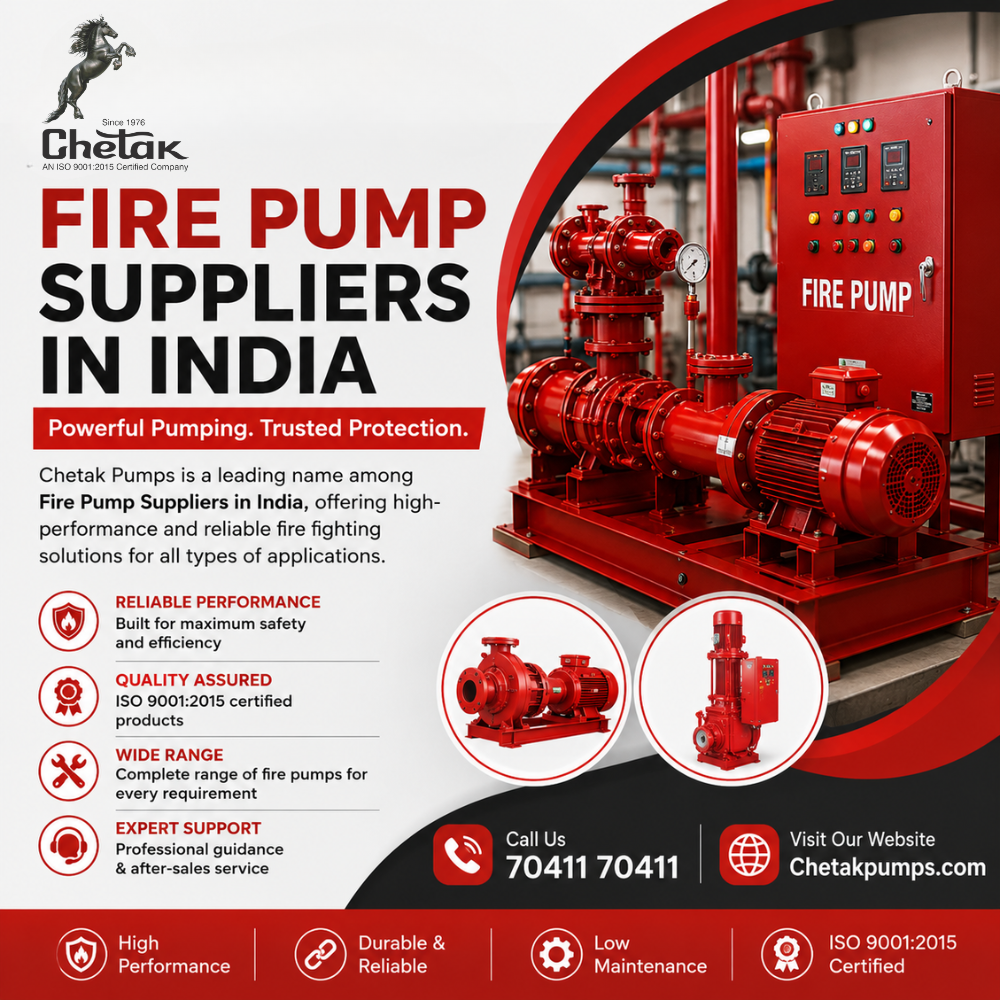
Advantages of Working with Fire Pump Manufacturers in India
India has a growing demand for reliable fire protection equipment across industrial, commercial, residential, infrastructure, and institutional projects. Working with Fire Pump Manufacturers in India can provide several practical advantages for domestic customers.
Local manufacturing and supply networks can simplify communication, product customization, delivery coordination, spare parts procurement, and service support. Customers can also discuss project-specific requirements directly with technical teams and select suitable pump configurations based on local installation conditions.
For large projects, manufacturers may also coordinate with consultants and contractors to understand hydraulic requirements and provide appropriate technical documentation.
Importance of Quality and Testing
Firefighting equipment must be manufactured and tested carefully because its reliability is critical during emergencies. Customers should pay attention to product specifications, testing procedures, materials, workmanship, and applicable fire protection requirements.
Testing may include checking pump performance, pressure, flow, motor operation, control systems, vibration, and other operating parameters. Proper commissioning after installation is equally important because even a high-quality pump can perform poorly if it is incorrectly installed or configured.
Regular inspection and maintenance should also form part of the facility’s fire safety program.
Maintenance and Long-Term Reliability
Purchasing the right equipment is only the beginning. Regular maintenance is necessary to keep the system ready for emergency operation.
A maintenance program may include routine inspection of:
- Pump and motor condition
- Pressure readings
- Valves and pipe connections
- Control panel operation
- Diesel fuel and battery condition
- Jockey pump performance
- Leakage
- Unusual vibration or noise
- Automatic starting systems
- Overall system pressure
Periodic testing can help identify potential problems before they become serious. Keeping suitable spare parts available can also reduce downtime during repairs.
Fire Pump Suppliers in India for Different Applications
The requirements of a manufacturing plant can be very different from those of a residential tower or commercial building. Fire Pump Suppliers in India therefore serve a wide range of applications.
These may include:
- Manufacturing industries
- Chemical and process plants
- Warehouses
- Shopping malls
- Hospitals
- Hotels
- Residential towers
- Educational institutions
- Power plants
- Data centers
- Airports
- Commercial buildings
- Infrastructure projects
Each application may require a different combination of pump type, capacity, drive arrangement, controls, and water storage configuration.
Making the Right Purchasing Decision
Businesses should avoid selecting firefighting equipment solely because it has a lower initial price. The total value of a pumping system depends on reliability, efficiency, service support, spare parts availability, installation quality, and expected operating life.
Before placing an order, buyers should clearly define the project requirements and compare technical specifications from different manufacturers and suppliers. It is also advisable to verify documentation, performance information, service capabilities, warranty conditions, and installation support.
A supplier with strong technical knowledge can help customers select an appropriate configuration instead of simply supplying a standard pump.
Conclusion
A dependable fire protection system requires careful planning, correctly selected equipment, professional installation, and regular maintenance. The pumping system is one of the most important parts of a water-based firefighting network because it must deliver the required pressure and flow when an emergency occurs.
Choosing experienced manufacturers and dependable suppliers can help businesses build a reliable and maintainable fire protection arrangement. By evaluating technical requirements, product quality, testing, service support, and long-term maintenance, organizations can make a better investment in their fire safety infrastructure and improve preparedness for unexpected emergencies.