
Gujarat Green Hydrogen Policy: A Game Changer for Renewable Energy
Introduction
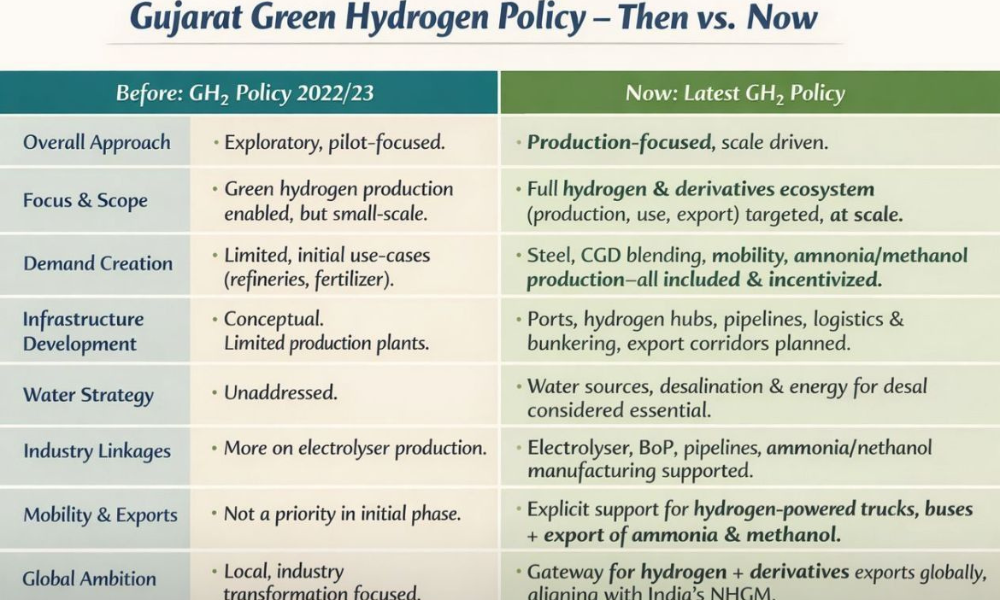
India is rapidly moving toward a sustainable energy future, and Gujarat is emerging as a leader in this transformation. With the introduction of the Green Hydrogen Policy, the state has taken a bold step toward reducing carbon emissions, boosting clean energy production, and attracting large-scale investments. The policy aligns with the national vision of the Government of India to achieve energy independence and net-zero emissions. It positions Gujarat as a hub for green hydrogen production, not only in India but also on the global stage.
What is Green Hydrogen?
Green hydrogen is produced using renewable energy sources such as solar and wind power. Through a process called “electrolysis,” water is split into hydrogen and oxygen without emitting carbon dioxide.
Unlike fossil fuel-based hydrogen (gray hydrogen), green hydrogen is completely clean and sustainable, making it a key component in combating climate change.
Why Gujarat is Leading the Way
Gujarat has several natural and strategic advantages that make it ideal for green hydrogen production:
- Abundant Renewable Energy Resources
The state has vast solar and wind energy potential, especially in regions like Kutch and Saurashtra.
- Strong Port Infrastructure
With major ports like Mundra Port, Gujarat can easily export green hydrogen and its derivatives such as ammonia.
- Industrial Ecosystem
Gujarat is already an industrial powerhouse, hosting refineries, chemical industries, and manufacturing units that can adopt green hydrogen.
- Strategic Location
Its coastal advantage supports global trade and logistics, making it attractive for international investors.
Key Highlights of the Gujarat Green Hydrogen Policy
The Green Hydrogen Policy introduced by the Government of Gujarat includes several investor-friendly and environmentally focused provisions:
- Land Allocation Support
- Government land will be made available for renewable energy and hydrogen projects
- Simplified approval processes for faster project execution
- Renewable Energy Integration
- Easy access to solar and wind energy for hydrogen production
- Encouragement for hybrid renewable projects
- Water Supply Provisions
- Allocation of treated wastewater for hydrogen production
- Reduces pressure on freshwater resources
- Financial Incentives
- Exemption from electricity duty
- Transmission and wheeling charge benefits
- Subsidies for infrastructure development
- Open Access Benefits
Industries can procure renewable power directly, reducing operational costs.
Economic Impact of the Policy
The policy is expected to significantly boost Gujarat’s economy:
- Investment Opportunities
Large-scale investments from domestic and international companies are anticipated.
- Job Creation
Thousands of jobs will be generated in:
- Manufacturing
- Engineering
- Research and development
- Export Potential
Green hydrogen and its derivatives can be exported to countries aiming for clean energy transitions.
- Industrial Growth
Existing industries can transition to cleaner energy sources, improving sustainability.
Environmental Benefits
The Gujarat Green Hydrogen Policy plays a crucial role in environmental conservation:
- Reduction in Carbon Emissions
Green hydrogen replaces fossil fuels, significantly lowering greenhouse gas emissions.
- Cleaner Air Quality
Reduced industrial pollution leads to better public health.
- Sustainable Energy Storage
Hydrogen can store renewable energy efficiently, solving intermittency issues.
Role in India’s Energy Transition
India has launched the National Green Hydrogen Mission to promote hydrogen as a clean energy source. Gujarat’s policy complements this mission by:
- Accelerating project implementation
- Supporting large-scale production
- Creating a hydrogen ecosystem
This synergy strengthens India’s position as a global leader in green energy.
Challenges and Considerations
Despite its promising outlook, the policy faces certain challenges:
- High Initial Costs
Setting up hydrogen plants requires significant investment.
- Water Consumption
Electrolysis requires large amounts of water, which must be managed sustainably.
- Technology Development
Advanced technologies are needed to improve efficiency and reduce costs.
- Market Demand
The adoption of green hydrogen is still in early stages, requiring strong policy support.
Future Outlook
The future of green hydrogen in Gujarat looks promising:
- Development of hydrogen hubs
- Increased collaboration with global companies
- Innovation in storage and transportation
- Expansion into sectors like transport, steel, and chemicals
The state is likely to become a global export hub for green hydrogen in the coming years.
Why This Policy is a Game Changer
The Gujarat Green Hydrogen Policy stands out because it:
- Combines economic growth with environmental sustainability
- Encourages private sector participation
- Provides strong government support
- Positions Gujarat as a pioneer in clean energy
It is not just a policy but a roadmap for the future of energy.
Conclusion
The Gujarat Green Hydrogen Policy marks a significant milestone in India’s journey toward sustainable development. By leveraging its natural resources, industrial strength, and strategic location, Gujarat is setting an example for other states and countries.
With strong backing from the government of Gujarat and alignment with national initiatives like the National Green Hydrogen Mission, the policy has the potential to transform the energy landscape.
While challenges exist, the long-term benefits far outweigh the obstacles. From reducing carbon emissions to creating economic opportunities, green hydrogen is indeed the fuel of the future.