
Holashtak 2026 Timing: Start Date & End Date, Significance, and Rules for Auspicious Activities
Introduction
Holashtak is an important period in the Hindu calendar that begins eight days before the festival of Holi. During this phase, auspicious activities such as marriages, engagements, housewarming ceremonies, and other auspicious works are traditionally avoided. In 2026, Holashtak will be observed with clearly defined dates and timings, which are important for devotees, priests, and families planning religious or social events. According to the Hindu Panchang, Holashtak 2026 will begin on Tuesday, March 3, at 5:08 PM and will end on Saturday, March 7, at 7:03 AM. This period holds deep religious, astrological, and cultural significance across many parts of India, especially in Gujarat, Rajasthan, Maharashtra, and North India.
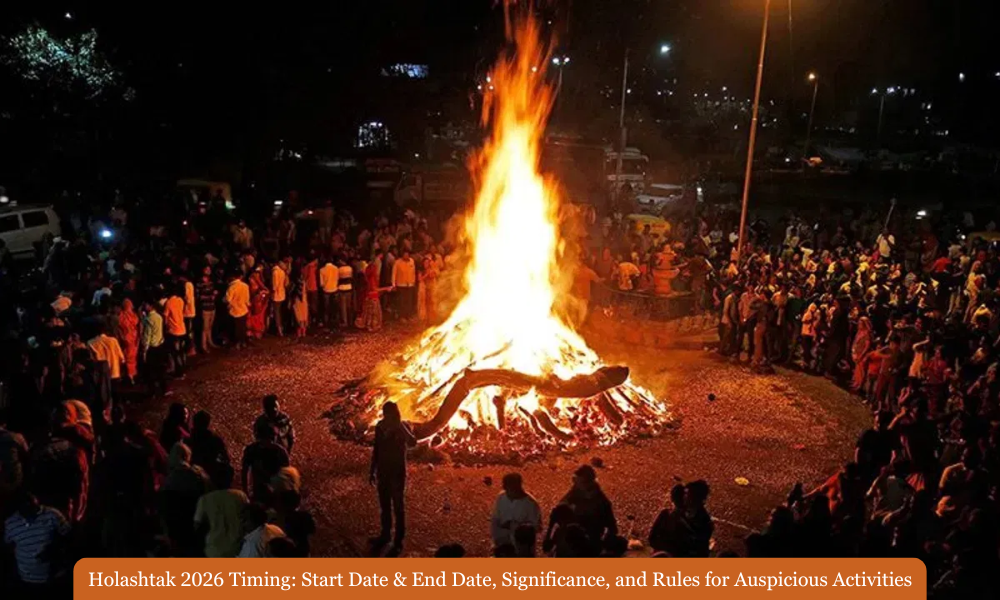
What is Holashtak?
Holashtak refers to the eight inauspicious days starting from Phalgun Shukla Ashtami and ending on Phalgun Purnima, the day of Holika Dahan. The word “Holashtak” itself is derived from “Holi” and “Ashtak” (eight days). It is believed that during these eight days, negative cosmic energies are active, making it an unfavorable time to begin new ventures or perform important life rituals.
Religious texts and traditional beliefs suggest that planetary movements during Holashtak create instability, which is why are auspicious works postponed until after Holi.
Holashtak 2026: Date, Day, and Time Details
Here are the exact details of Holashtak 2026:
- Start Date: Tuesday, March 3, 2026
- Start Time: 5:08 PM
- End Date: Saturday, March 7, 2026
- End Time: 7:03 AM
- Total Duration: Approximately 3 days and 14 hours (as per regional Panchang calculations)
Although Holashtak is traditionally described as an eight-day period, the actual timing may vary slightly depending on sunrise, tithi calculations, and regional Panchang traditions.
Why Auspicious Activities Are Avoided During Holashtak
During Holashtak, it is believed that all eight planets (excluding the Sun) are in an unfavorable position. Because of this, activities that mark new beginnings are avoided. These include:
- Marriage and engagement ceremonies
- Griha Pravesh (housewarming)
- Mundan (first haircut ceremony)
- Starting new businesses or projects
- Buying property or vehicles
- Naming ceremonies and other major rituals
However, daily worship, fasting, charity, chanting, and spiritual practices are considered beneficial during this time.
Religious Significance of Holashtak
The belief associated with Holashtak is closely linked to the story of Holika and Prahlad. According to Hindu mythology, Prahlad, a devoted follower of Lord Vishnu, was subjected to severe torture during these eight days by his father, the demon king Hiranyakashipu. Each day symbolized a different form of suffering.
On the final day, Holika attempted to burn Prahlad, but divine intervention saved him, while Holika was destroyed. This victory of good over evil is commemorated as Holika Dahan, marking the end of Holashtak.
Because of these associations with hardship and suffering, the period is considered unsuitable for celebrations and new beginnings.
Importance of Timing: Why 5:08 PM and 7:03 AM Matter
In 2026, Holashtak begins after sunset on March 3 at 5:08 PM, based on tithi calculations. In Hindu traditions, many observances are determined by the lunar calendar rather than the Gregorian date alone.
Similarly, Holashtak ends on March 7 at 7:03 AM, after which auspicious activities can slowly resume, depending on local customs. However, most families wait until Holika Dahan and Dhulandi (Holi) celebrations are fully completed before organizing major events.
Regional Beliefs and Observance
The observance of Holashtak varies slightly across different regions of India:
- Gujarat: Holashtak is strictly followed, and most families avoid fixing wedding dates during this time.
- Rajasthan & North India: Religious observance is strong, with emphasis on fasting, temple visits, and charity.
- Maharashtra: While not as rigid, many still avoid major life events during this phase.
Despite regional differences, the core belief remains the same Holashtak is a period for restraint, reflection, and devotion.
What Can Be Done During Holashtak?
While auspicious ceremonies are avoided, Holashtak is considered a powerful time for spiritual growth. Devotees often engage in:
- Daily prayers and bhajans
- Chanting Vishnu and Narayan mantras
- Donating food, clothes, or essentials to the needy
- Fasting on specific days
- Reading religious texts
Such practices are believed to reduce negative effects and bring mental peace.
Holashtak and Holi 2026 Connection
Holashtak ends just before Holika Dahan, which symbolizes the destruction of negativity. The very next day, Dhulandi (Rangwali Holi) is celebrated with colors, joy, and togetherness.
This transition from Holashtak to Holi represents the movement from hardship to happiness, darkness to light, and suffering to celebration—one of the most powerful symbolic cycles in Hindu tradition.
Planning Tips for 2026
For families and event planners, knowing the exact Holashtak timing is crucial:
- Avoid scheduling weddings or engagements between March 3 evening and March 7 morning
- Postpone griha pravesh and property purchases until after Holi
- Consult a local priest or Panchang for region-specific muhurat after Holashtak
Proper planning ensures that traditions are respected while avoiding last-minute changes.
Conclusion
Holashtak 2026, starting on Tuesday, March 3 at 5:08 PM and ending on Saturday, March 7 at 7:03 AM, is a significant period in the Hindu calendar that emphasizes patience, devotion, and spiritual discipline. While it is considered inauspicious for new beginnings, it holds deep religious meaning connected to faith, endurance, and the ultimate triumph of good over evil.
By understanding the dates, days, and timings of Holashtak 2026, devotees can plan their religious and personal activities wisely, honoring tradition while preparing for the joyful celebrations of Holi that follow.